On June 27, the Supreme Court released its decision in . The decision has not received the attention it merits. A close reading of the conservative majority鈥檚 opinion suggests that the high court is moving toward determining that public schooling violates the First Amendment of the Constitution. The decision could mean the end of public education in America.
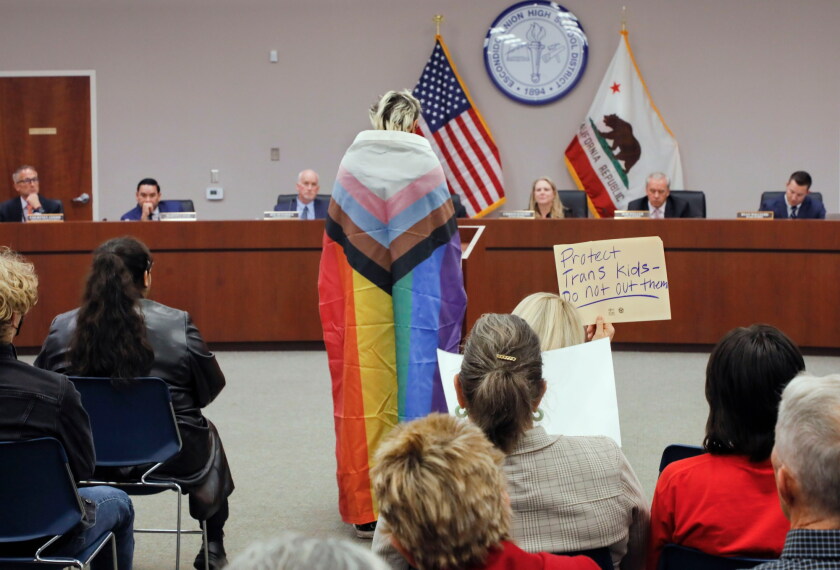
The case concerned the Montgomery County, Md., board of education鈥檚 decision to integrate LGBTQ+ inclusive readings into its literacy curriculum to further its goal of representing diversity. At first, the district permitted parents to opt out their children, but when that policy became unworkable, it decided that parents would no longer be notified when the books were being used.
In response, several parents sued, arguing that exposing their children to the books threatened their right to raise their children according to their faith.

The U.S. Supreme Court sided with the parents. The court鈥檚 majority opinion concluded that exposing students to progressive ideas about marriage and gender placed an unconstitutional burden on parents鈥� religious liberties. Writing for the court鈥檚 six conservative justices, Justice Samuel A. Alito Jr. argued that the determining precedent is Wisconsin v. Yoder (1972), in which the court decided that a law mandating all children attend high school violated the religious liberties of the Amish community.
The majority determined that Yoder, far from an isolated case concerning a discrete community, is a general precedent applicable to all parents. In other words, all parents are Amish now, with the right to require the public schools to protect their children from curricula that burdens their capacity to raise their children according to their faith.
What, then, constitutes a burden on religious freedom? The court first disputed the school board鈥檚 claim to be merely exposing students, arguing that the record showed that the school board鈥檚 goal was to teach students to support same-sex marriage and gender fluidity.
If the court had stopped there, that would have been one thing, but Alito makes an additional move, arguing that even exposure to ideas that go against parents鈥� faith could be unconstitutional. The issue is not whether public schools coerce students鈥� beliefs but whether introducing an idea might undermine parents鈥� religious freedom. 鈥淲e reject this chilling vision of the power of the state to strip away the critical right of parents to guide the religious development of their children,鈥� Alito wrote.
In her dissent, signed by the three liberal justices, Justice Sonia Sotomayor responds that the court鈥檚 majority decision is untenable. 鈥淕iven the great diversity of religious beliefs in this country,鈥� she writes, 鈥渃ountless interactions that occur every day in public schools might expose children to messages that conflict with a parent鈥檚 religious beliefs.鈥�
Sotomayor predicts the result of the decision will be 鈥渃haos for this Nation鈥檚 public schools.鈥� 鈥淣ever, in the context of public schools or elsewhere, has this Court held that mere exposure to concepts inconsistent with one鈥檚 religious beliefs could give rise to a First Amendment claim.鈥� Ultimately, Sotomayor concludes, 鈥渢o presume public schools must be free of all such exposure is to presume public schools out of existence.鈥�
Sotomayor鈥檚 objection is ultimately practical: The majority鈥檚 opinion is so broad and its criteria so loose that public schools will not be able to function. Instead of elected school boards working things out locally, courts will ultimately adjudicate all curricular decisions at great cost of time and money.

Within the court鈥檚 majority opinion, however, lies a deeper threat to the existence of public schools. Because the court determined that exposure to objectionable material violates parents鈥� rights, policies involving that exposure are subject to 鈥渟trict scrutiny,鈥� the highest standard of judicial review. This level of judicial review requires that the government must demonstrate that the policy in question both serves an interest of the 鈥渉ighest order鈥� and is 鈥渘arrowly tailored鈥� to achieve that interest.
The Supreme Court would, no doubt, agree that an educated citizenry is a public interest 鈥渙f the highest order.鈥� What the court does not address is whether public school systems are 鈥渘arrowly tailored鈥� to achieve the state鈥檚 goals.
Today, elected officials at the state and local levels choose the curricula that their schools will teach. But in effectively determining that any curriculum will violate parents鈥� rights, the court took a step toward outlawing public schools.
What might the court deem a more 鈥渘arrowly tailored鈥� policy to achieve the state鈥檚 goals of an educated citizenry? Although the court does not say so, the answer may be a private school voucher program in which parents choose schools that fit their faith rather than common schools that serve an entire community.
One cannot exaggerate how dangerous and unhistorical this ruling is. The founding generation considered increasing access to education , enshrining it in the young country鈥檚 revolutionary state constitutions. In the 1787 Northwest Ordinance, the federal government even stated that 鈥渟chools and the means of education shall forever be encouraged鈥� and followed through by requiring land be set aside in new territories to generate revenue for public schools.
Today, every state constitution mandates a public education system, with many explicitly framing .
All this history is at risk of being jettisoned. Instead, the court has determined that the need to protect students from being exposed to ideas hostile to their family鈥檚 religious beliefs trumps everything else. Under the court鈥檚 new rules, no curriculum could ever be constitutional unless parents are always informed in advance and can protect their children from anything objectionable to their specific religious beliefs.
Given this burden, states may be forced to find a more 鈥渘arrowly tailored鈥� approach to educating citizens. And before we know it, one of America鈥檚 greatest successes, one of the most popular American institutions, and one of the few we still share in common, will be gone.