
Homeowners across Pennsylvania have signed up for a new property-tax cut. But their local school boards hold the power to activate those reductions, and only a handful have agreed to do so.
The Keystone State’s 501 school districts have until May 30 to decide whether to “opt in� to Act 72, which was enacted last July in first-term Democratic Gov. Edward G. Rendell’s bid to deliver on promises to lower property taxes and increase the state’s share of school funding. Only four districts so far have chosen to participate.
Act 72 and its companion measure, Act 71, allow slot machines in Pennsylvania, and funnel a share of the proceeds to consenting school districts to use—along with a required boost in the local earned-income tax—to lower property taxes. The formula essentially substitutes state money for a chunk of the local revenue that supports schools.
Homeowners have been seeking relief from property taxes that have risen more than 60 percent in the past dozen years. By some estimates, 70 percent of homeowners have applied for Act 72 reductions.
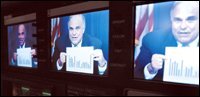
But school boards have been slow to sign on, prompting criticism by some that they are protecting their unfettered taxing power at citizens’ expense. Gov. Rendell has launched a series of public appearances urging voters to press school boards to opt in.
“It’s topic number one in Pennsylvania right now,� said G. Terry Madonna, a veteran political analyst who directs the Center for Politics and Public Affairs at Franklin & Marshall College in Lancaster, Pa. “This is as big an issue as I’ve seen in a decade among the education community.�
‘Love and Support’
School boards and education groups contend there are too many unresolved questions about the law’s impact to opt in by the May 30 deadline. They say they should have more time, since slot-machine proceeds are not expected to be distributed until 2007. Moves afoot in the courts and the legislature could extend that deadline, a delay the governor views as unnecessary.
Chief among school boards’ concerns is a “back-end referendum� provision that requires school districts to get voters’ permission to raise property taxes above an inflation-pegged index if they decide to accept the gambling revenue. School boards in Pennsylvania have never had to ask voters if they can raise taxes, and some fear the mechanism could result in cutbacks.
“If it’s the only tax [citizens] get to vote on, what do you expect they’re going to do?� said William H. Johnson, a spokesman for the Pennsylvania State Education Association, a National Education Association affiliate. The 173,000-member state union is also concerned because the law will force districts to draft budgets several months earlier, with scarce information about the coming year’s state funds.
If gambling proceeds reach $1 billion, as the state hopes, they will enable average property-tax cuts of 20 percent, or about $330 per homeowner. But Joseph Bard, the executive director of the Pennsylvania Association of Rural and Small Schools, said some people wonder whether proceeds might fall short, limiting the boards’ taxing power in exchange for only a modest homeowner benefit.
Gov. Rendell’s secretary of planning and policy, Donna Cooper, argues that Act 72 moves the state toward a fairer tax structure. Combined with recent increases in state aid for public schools, and a first-ever extra increase for the financially neediest districts, the law will raise the state’s share of school funding from 36 percent to 44 percent by 2006, she said.
Ten exceptions to the law ensure that it won’t put districts in a financial straitjacket, Ms. Cooper said. Districts that opt in may raise taxes above the index without voter permission to finance, for instance, expenses for special education or the federal No Child Left Behind Act.
The state law offers a potent political benefit to districts, said Ms. Cooper: Pennsylvania homeowners—most of whom do not have children in public schools—will “love and support� their schools more if districts are not taxing them so heavily.
Limited Power
Assuming most districts ultimately opt in, Act 72 would bring Pennsylvania more into line with other states, said Mike Griffith, a school finance expert for the Education Commission of the States, based in Denver. In most states, local school boards have no taxing power, or face a cap or voter-permission requirement when they wish to raise taxes, he said.
“Pennsylvania is the only state I know of where there is no limit for how much a local school board can increase local property taxes,� Mr. Griffith said. “They have essentially a blank check.�
Some who favor reduced school spending maintain the law is too weak. Matthew J. Brouillette, the director of the Commonwealth Foundation, a conservative-leaning think tank based in Harrisburg, the state capital, said Act 72 is “toothless� because of the 10 exceptions.
Many ÌÇÐĶ¯Âþvlog believe policymakers should go beyond the debate over Act 72, and revamp how Pennsylvania finances its schools. Richard D. Nilsen, the superintendent of the 3,600-student Dover Area school district, said property values enable his wealthier neighbors to generate $2 million from raising taxes by 1 mill, compared with just $833,000 in his district.
“Unless we get real estate out of the picture, we’ll never solve the equity issue,� he said.


