ÌÇÐ͝Âþvlog

Education Funding

Session Over, Not Feuding, as S.C. Debates Funding

By Michele McNeil — June 09, 2009 1 min read
  • Save to favorites
  • Print
Email Copy URL

The following offers highlights of the recent legislative sessions. Precollegiate enrollment figures are based on fall 2008 data reported by state officials for public elementary and secondary schools. The figures for precollegiate education spending do not include federal flow-through funds, unless noted.

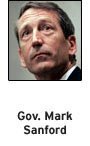
The fallout from the 2009 legislative session continues in state court, as Gov. Sanford and lawmakers battle over whether South Carolina will accept $700 million in federal stimulus money that would help pay teachers’ salaries and fund public safety.

Gov. Jim Douglas
Republican
Senate:
19 Democrats
27 Republicans
House:
53 Democrats
71 Republicans
Enrollment:
668,700

Gov. Sanford does not want to accept the money from the State Fiscal Stabilization Fund, created under the American Recovery and Reinvestment Act, because he argues it’s one-time money that would contribute to long-term financial problems for the state. He tried, unsuccessfully, to get the Obama administration to let him use the money to pay off state debt instead. What’s more, Gov. Sanford argues that governors, by law, are the ones who must apply for the stabilization aid, so it’s ultimately his decision.

But the legislature, through its budget-making authority, wants to use the money to help balance the state budget, which stands at $5.7 billion for fiscal 2010 after lawmakers made $1 billion in cuts over the last several months. Gov. Sanford vetoed the stimulus-involved parts of the budget, but the legislature overturned the veto. The crux of the issue is whether the legislature can force the governor to accept the federal economic aid.

At stake for K-12 schools is about $185 million in stimulus dollars, with another $100 million for higher education. Even with the stimulus aid, spending on K-12 education would be $2.2 billion—a cut of about 8 percent—from last year’s $2.4 billion appropriation.

Related Tags:

A version of this article appeared in the June 10, 2009 edition of Education Week

Events

This content is provided by our sponsor. It is not written by and does not necessarily reflect the views of Education Week's editorial staff.
Sponsor
College & Workforce Readiness Webinar
Smarter Tools, Stronger Outcomes: Empowering CTE Educators With Future-Ready Solutions
Open doors to meaningful, hands-on careers with research-backed insights, ideas, and examples of successful CTE programs.
Content provided by 
This content is provided by our sponsor. It is not written by and does not necessarily reflect the views of Education Week's editorial staff.
Sponsor
Reading & Literacy Webinar
Improve Reading Comprehension: Three Tools for Working Memory Challenges
Discover three working memory workarounds to help your students improve reading comprehension and empower them on their reading journey.
Content provided by 
Recruitment & Retention Webinar EdRecruiter 2026 Survey Results: How School Districts are Finding and Keeping Talent
Discover the latest K-12 hiring trends from EdWeek’s nationwide survey of job seekers and district HR professionals.

EdWeek Top School Jobs

Teacher Jobs
Search over ten thousand teaching jobs nationwide — elementary, middle, high school and more.
Principal Jobs
Find hundreds of jobs for principals, assistant principals, and other school leadership roles.
Administrator Jobs
Over a thousand district-level jobs: superintendents, directors, more.
Support Staff Jobs
Search thousands of jobs, from paraprofessionals to counselors and more.

Read Next

Education Funding Educator Layoffs Loom as Canceled Community Schools Grants Remain in Limbo
Three legal challenges and bipartisan backlash have followed the Trump administration's funding cuts.
5 min read
Stephon Thompson, an administrator at Stevenson Elementary School, directs students through the doors at the beginning of the school day in Southfield, Mich., on Feb. 28, 2024.
Stephon Thompson directs students through the doors at the beginning of the school day at Stevenson Elementary School in Southfield, Mich., on Feb. 28, 2024. The school has added on-site social services in recent years as a community school. The Trump administration has recently discontinued 19 federal grants that help schools become local service hubs for students and their families.
Samuel Trotter for Education Week
Education Funding ‘Terminated on a Whim’: The AFT Sues Trump’s Ed. Dept. Over Funding Cuts
The AFT and a Chicago-area nonprofit argue the cuts happened without following required procedures.
Randi Weingarten speaks at a press conference at Murrell Dobbins Career & Technical Education High School in Philadelphia, Pennsylvania on September 2, 2025.
Randi Weingarten, the president of the American Federation of Teachers, speaks at a press conference in Philadelphia on Sept. 2, 2025. Weingarten says that cuts to federal education funds by the Trump administration "are only hurting young people."
Rachel Wisniewski for Education Week
Education Funding School Mental Health Projects Canceled by Trump Might Still Survive
The end of funding could still be days away, but a new court order offers some hope for grantees.
6 min read
Reducing, removing or overcoming financial barriers, financial concept : US dollar bag on a maze puzzle.
William Potter/iStock
Education Funding 'A Gut Punch’: What Trump’s New $168 Million Cut Means for Community Schools
School districts in 11 states will imminently lose federal funds that help them cover staff salaries.
10 min read
Genesis Olivio and her daughter Arlette, 2, read a book together in a room within the community hub at John H. Amesse Elementary School on March 13, 2024 in Denver. Denver Public Schools has six community hubs across the district that have serviced 3,000 new students since October 2023. Each community hub has different resources for families and students catering to what the community needs.
Genesis Olivio and daughter Arlette, 2, read a book in one of Denver Public Schools' community hubs in March 2024. The community hubs, which offer food pantries, GED classes, and other services, are similar to what schools across the country have developed with the help of federal Community Schools grants, many of which the U.S. Department of Education has prematurely terminated.
Rebecca Slezak For Education Week