ÌÇÐ͝Âþvlog

Education Funding

Session Over, Not Feuding, as S.C. Debates Funding

By Michele McNeil — June 09, 2009 1 min read
  • Save to favorites
  • Print
Email Copy URL

The following offers highlights of the recent legislative sessions. Precollegiate enrollment figures are based on fall 2008 data reported by state officials for public elementary and secondary schools. The figures for precollegiate education spending do not include federal flow-through funds, unless noted.

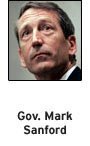
The fallout from the 2009 legislative session continues in state court, as Gov. Sanford and lawmakers battle over whether South Carolina will accept $700 million in federal stimulus money that would help pay teachers’ salaries and fund public safety.

Gov. Jim Douglas
Republican
Senate:
19 Democrats
27 Republicans
House:
53 Democrats
71 Republicans
Enrollment:
668,700

Gov. Sanford does not want to accept the money from the State Fiscal Stabilization Fund, created under the American Recovery and Reinvestment Act, because he argues it’s one-time money that would contribute to long-term financial problems for the state. He tried, unsuccessfully, to get the Obama administration to let him use the money to pay off state debt instead. What’s more, Gov. Sanford argues that governors, by law, are the ones who must apply for the stabilization aid, so it’s ultimately his decision.

But the legislature, through its budget-making authority, wants to use the money to help balance the state budget, which stands at $5.7 billion for fiscal 2010 after lawmakers made $1 billion in cuts over the last several months. Gov. Sanford vetoed the stimulus-involved parts of the budget, but the legislature overturned the veto. The crux of the issue is whether the legislature can force the governor to accept the federal economic aid.

At stake for K-12 schools is about $185 million in stimulus dollars, with another $100 million for higher education. Even with the stimulus aid, spending on K-12 education would be $2.2 billion—a cut of about 8 percent—from last year’s $2.4 billion appropriation.

Related Tags:

A version of this article appeared in the June 10, 2009 edition of Education Week

Events

This content is provided by our sponsor. It is not written by and does not necessarily reflect the views of Education Week's editorial staff.
Sponsor
College & Workforce Readiness Webinar
Smarter Tools, Stronger Outcomes: Empowering CTE Educators With Future-Ready Solutions
Open doors to meaningful, hands-on careers with research-backed insights, ideas, and examples of successful CTE programs.
Content provided by 
This content is provided by our sponsor. It is not written by and does not necessarily reflect the views of Education Week's editorial staff.
Sponsor
Reading & Literacy Webinar
Improve Reading Comprehension: Three Tools for Working Memory Challenges
Discover three working memory workarounds to help your students improve reading comprehension and empower them on their reading journey.
Content provided by 
Recruitment & Retention Webinar EdRecruiter 2026 Survey Results: How School Districts are Finding and Keeping Talent
Discover the latest K-12 hiring trends from EdWeek’s nationwide survey of job seekers and district HR professionals.

EdWeek Top School Jobs

Teacher Jobs
Search over ten thousand teaching jobs nationwide — elementary, middle, high school and more.
Principal Jobs
Find hundreds of jobs for principals, assistant principals, and other school leadership roles.
Administrator Jobs
Over a thousand district-level jobs: superintendents, directors, more.
Support Staff Jobs
Search thousands of jobs, from paraprofessionals to counselors and more.

Read Next

Education Funding A Guide to Where School Mental Health Grants Stand After a New Legal Twist
Temporary relief for one set of projects raises questions for other initiatives vying for federal money.
5 min read
A student visits a sensory room at a Topeka, KS elementary school, on Nov. 3, 2021.
A student visits a sensory room at an elementary school in Topeka, Kan., on Nov. 3, 2021. Schools have expanded their student mental health services in recent years, many with support from hundreds of millions of dollars in federal grants that the Trump administration pulled earlier this year and have since been caught up in legal proceedings.
Charlie Riedel/AP
Education Funding Funding Ends for School Mental Health Projects After a 'Roller Coaster' Year
Schools, universities, and others thought they had five years to boost student mental health services.
11 min read
Illustration of dollar symbol in rollercoaster.
iStock
Education Funding Students Make Appeals to Congress to Protect K-12 Funding
National Student Council representatives shared perspectives on challenges schools are facing.
6 min read
Molly Kaldahl (right) and Ava Nkwocha, who attend Millard South High School in Omaha, Neb., meet with their senator’s legislative staff to discuss the National Student Council’s federal legislative agenda on Oct. 28, 2025, in Washington, D.C.
Molly Kaldahl, right, and Ava Nkwocha, who attend Millard South High School in Omaha, Neb., meet with the legislative staff of U.S. Sen. Pete Ricketts, R-Neb., to discuss the National Student Council’s federal legislative agenda on Oct. 28, 2025, in Washington.
Courtesy of Allyssa Hynes/NASSP
Education Funding Opinion The Federal Shutdown Is a Rorschach Test for Education
Polarization, confusion, and perverse incentives turn a serious discussion into a stylized debate.
7 min read
The United States Capitol building as a bookcase filled with red, white, and blue policy books in a Washington DC landscape.
Luca D'Urbino for Education Week