Ķvlog

Federal

Virginia Lawmakers Enact Measure Taking Aim at NCLB

By Mary Ann Zehr — March 17, 2008 3 min read
BRIC ARCHIVE
  • Save to favorites
  • Print
Email Copy URL

The following offers highlights of the recent legislative session. Precollegiate enrollment figures are based on fall 2007 data reported by state officials for public elementary and secondary schools. The figures for precollegiate education spending do not include federal flow-through funds, unless noted.

VIRGINIA

The Virginia legislature has approved a bill that would direct the state board of education to decide whether to withdraw from participation in the federal No Child Left Behind Act. But neither Gov. Tim Kaine, a Democrat, nor the board is likely to approve such a move, according to officials in the state.

Gordon Hickey, a spokesman for Mr. Kaine, said the governor—who had yet to sign the bill as of last week—doesn’t support withdrawing Virginia from the No Child Left Behind Act, which would put much of the state’s federal education funding at risk.
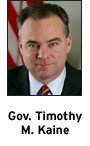
Gov. Tim Kaine
Democrat
Senate:
21 Democrats
19 Republicans
House:
45 Democrats
53 Republicans
Enrollment:
1.2 million

Under President Bush’s proposal for the fiscal 2009 K-12 federal education budget, Virginia is set to receive $416 million in federal education funding, according to data released by the U.S. Department of Education.

Gov. Kaine is “not going to throw that away,” Mr. Hickey said. He noted that the bill says simply that the board should study the issue, and the governor doesn’t have any problem with such a study, so he’ll likely support the bill.

The legislature’s action in its recently concluded annual session “reflects the frustration that’s been felt at the state and school district level in implementing this important legislation,” said Charles B. Pyle, the director of communications for the Virginia Department of Education.

He added, however, that “the board has never taken the position that Virginia should withdraw from No Child Left Behind.” The 6-year-old revision of the Elementary and Secondary Education Act requires that schools show annual progress toward student proficiency or face a range of possible penalties.

The Virginia legislature approved and sent to the governor on March 8 a bill that said that if the board of education should decide that withdrawal were the best option, it should submit a plan for how to do so to the governor and the legislature by June 2009.

Virginia officials have sought additional flexibility from the federal Department of Education on some NCLB issues in the past but have been rebuffed. For example, the state board had requested more flexibility in determining the order in which school districts offer certain educational options—tutoring or school choice, for example—when those districts are found to need improvement under the federal law. The federal government permitted the state to carry out that plan only as a pilot program, not statewide, according to Mr. Pyle.

Mr. Pyle also noted that some state Ķvlog are unhappy with how the federal government required Virginia to stop allowing some English-language learners to take the state’s English-language-proficiency test as a substitute for its regular reading test.

“That was a source of great frustration for Virginia school districts to have the rug pulled out from under them after administering a test for several years [to ELLs] in good faith.”

In addition to passing the NCLB-related bill, the legislature approved a bill to expand the governor’s preschool initiative that serves children who are eligible for free and reduced-price lunches. Gov. Kaine scaled back his own request for preschool funds to $43 million, from $58 million, after he realized he wouldn’t get what he had initially requested. In the end, the legislature decided to provide $22 million, according to Mr. Hickey.

The legislature also adopted a bill that would require clerks of courts in Virginia to report to the state school board and the local school board if any teachers have been convicted of sexual molestation or physical or sexual abuse or rape of a child or any felony involving drugs.

Virginia’s current K-12 budget is $6.9 billion out of the state’s $36 billion budget. As of presstime last week, legislators were still hashing out what the state budget, and K-12 budget, would be for the coming fiscal year.

A version of this article appeared in the March 19, 2008 edition of Education Week

Events

This content is provided by our sponsor. It is not written by and does not necessarily reflect the views of Education Week's editorial staff.
Sponsor
College & Workforce Readiness Webinar
The Road to Opportunity: Making CTE Accessible for All
The most valuable CTE happens off campus. For too many students, transportation is the barrier that keeps opportunity out of reach.
Content provided by HopSkipDrive
This content is provided by our sponsor. It is not written by and does not necessarily reflect the views of Education Week's editorial staff.
Sponsor
Recruitment & Retention Webinar
New Hire, No Laptop, No Login: Preventing Day-One Disruption
What happens before day one matters. Discover how districts are improving the new hire experience.
Content provided by 
Teaching Profession K-12 Essentials Forum Supporting the New K-12 Workforce: What Teachers Need to Stay at School
 Join this free virtual event to discover what teachers say they need to feel supported to stay in classrooms for the long haul.

EdWeek Top School Jobs

Teacher Jobs
Search over ten thousand teaching jobs nationwide — elementary, middle, high school and more.
Principal Jobs
Find hundreds of jobs for principals, assistant principals, and other school leadership roles.
Administrator Jobs
Over a thousand district-level jobs: superintendents, directors, more.
Support Staff Jobs
Search thousands of jobs, from paraprofessionals to counselors and more.

Read Next

Federal Education Department Moves Special Ed. and Civil Rights to Other Agencies
Special education programs help schools serve more than seven million K-12 students with disabilities nationwide.
9 min read
A banner featuring a photo of President Donald Trump hangs outside the Department of Justice in Washington on Monday, June 15, 2026.
A banner featuring a photo of President Donald Trump hangs outside the Department of Justice in Washington on Monday, June 15, 2026. The U.S. Department of Education is moving its office for civil rights to the Justice Department as part of a fresh wave of outsourcing.
Bill Clark/CQ Roll Call via AP
Federal Trump's Ed. Dept. Backs Away From Addressing Civil Rights for Black Students
Civil rights attorneys describe the administration’s actions as an inversion of legal history.
6 min read
Thomas Chalmers Public School sign is seen outside of school in Chicago, Wednesday, July 13, 2022. America's big cities are seeing their schools shrink, with more and more of their schools serving small numbers of students. Those small schools are expensive to run and often still can't offer everything students need (now more than ever), like nurses and music programs. Chicago and New York City are among the places that have spent COVID relief money to keep schools open, prioritizing stability for students and families. But that has come with tradeoffs. And as federal funds dry up and enrollment falls, it may not be enough to prevent districts from closing schools.
Children are seen outside the Thomas Chalmers Public School in Chicago on July 13, 2022. Under the Trump administration, efforts to address deep-rooted inequities for students of color are being cast as discriminatory against white students. The administration withheld more than $20 million from Chicago schools when the district refused to end its Black Student Success Program.
Nam Y. Huh/AP
Federal Interactive Feds Issue a Slimmed-Down Data Release on U.S. Schools
The Condition of Education highlights school enrollment, finance, and graduation data.
Image of blurry data and a school building.
Laura Baker/Education Week + Canva
Federal Opinion We Need Better Data to Understand What Happens to Students After High School
Here are the two things we need before we can answer how well we’re preparing students.
Jennifer Bell-Ellwanger & Sara Schapiro
4 min read
Future data arrow concept with student looking out to a tangle of possibilities. Choice. grow chart up decisions. Pathways.
Vanessa Solis/Education Week + Getty
