Ķvlog

Student Absenteeism

The Lesson Schools Can Learn From Student-Athletes’ Attendance Data

An insight for schools as they struggle to cut chronic absenteeism
By Caitlynn Peetz Stephens — April 13, 2026 3 min read
Easton's Aubre Krazer, left, battles Hazleton Area's Miah Molinaro, right, during the first found of the PIAA High School Wrestling Championships in Hershey, Pa., on March 7, 2024. Girls’ wrestling has become the fastest-growing high school sport in the country.
  • Save to favorites
  • Print
Email Copy URL

High school students who participate in varsity sports are less likely than their peers to be chronically absent, even when their chosen sport is in its offseason, according to new research looking at Indiana high schools.

builds on a growing body of research that shows kids who participate in clubs or extracurricular activities and feel a sense of belonging at school are more likely to show up consistently.

It also shows that older students will find a way to get to school—despite obstacles often cited as barriers to attendance, like transportation challenges—if they have an incentive to do so, said one of the report’s authors, Nat Malkus, deputy director of education policy studies at the American Enterprise Institute, a conservative-leaning think tank that published the report and .
See Also

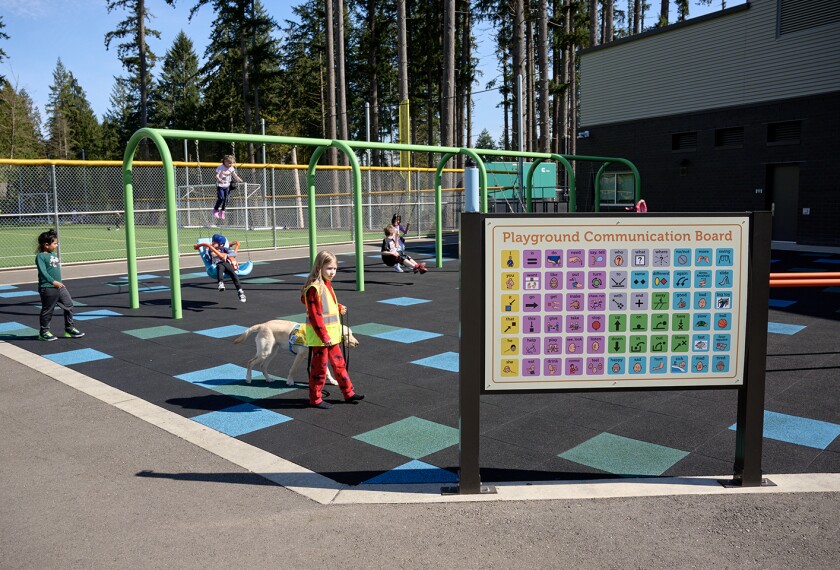
Students at Ruby Bridges Elementary School in Woodinville, Wash., play during recess on April 2, 2024. Students have access to cards with images and words on them so all students, including those who do not speak, can communicate on the playground.
Meron Menghistab for Education Week

“If you’re engaged in sports, there’s an attendance advantage, and if there is an attendance advantage, then it suggests that kids have some agency over this—it’s not always all out of their control,” Malkus said.

“It demonstrates that, for a lot of students, they can find ways to get to school when they have the right motivation … and districts can take that as a lesson that we can expect better attendance of students and that there is room for improvement.”

The study, published this month by AEI, comes out as schools’ progress in fighting chronic absenteeism—which peaked in the 2021-22 school year following pandemic building closures—has slowed particularly in the last two years.

Athletes were absent less often throughout the school year

In the study, Malkus and co-author Sam Hollon analyzed sports participation and attendance data of more than 250,000 Indiana high school students during the 2023-24 school year; about 23% participated in at least one varsity sport that year.

They found that varsity athletes had 20% fewer absences than their peers throughout the school year, even when controlling for factors like poverty and race that correlated with higher absence rates. The athletes were about one-third less likely to be chronically absent—missing at least 10% of school days. On average, the athletes had lower absences rates than non-athletes throughout the entire year, and athletes’ absences fell further when their sport was in season.

The average daily absence rate for Indiana high school students in the 2023-24 school year was about 6.9%. Varsity athletes’ absence rate was about 5% when their sport was in season and about 5.9% when in the offseason, according to the research.

Students who played multiple sports had even lower absenteeism.

See Also

Dr. April Brooks, the director of athletics for Jefferson County Public Schools, (center) watches a boy’s varsity basketball game at Jeffersontown High School in Louisville, Kentucky, on Friday, January 9, 2026.
Dr. April Brooks, director of athletics for Jefferson County Public Schools (center), watches a boys’ varsity basketball game at Jeffersontown High School in Louisville, Ky., on Jan. 9, 2026.
Madeleine Hordinski for Education Week

Non-athletes had a chronic absenteeism rate of about 22%, compared with 15% of students who played one varsity sports season and 11% of students who played two seasons. Students who participated in three sports seasons had a chronic absenteeism rate of just 10%.

By comparison, the nationwide chronic absenteeism rate in 2023-24 was 24%, according to AEI’s tracking. The rate was 15% during the 2018-19 school year, the last full year before the pandemic.

The researchers found a strong association between participation in varsity sports and better attendance, and they believe participating in sports is likely the factor that boosts students’ attendance.

“It is difficult to explain these effects except by attributing some portion of them to varsity sports participation itself,” they write in the report.

The data don’t include students who participated in non-varsity sports, like junior varsity or intramurals, so “we think the sports difference is probably even bigger than what we captured here,” Malkus said.

The Owensboro High School football team is greeted by students lining the hallways at Newton Parrish Elementary School during a traveling pep rally to send the team off to play in the KHSAA class 5A football championship in Lexington, Ky., Wednesday, Dec. 3, 2025, in Owensboro, Ky.

Research shows a sense of belonging boosts students’ attendance

For Malkus, the takeaway for schools isn’t necessarily to push every student to participate in a sport.

Rather, schools should ensure kids have an activity to look forward to that requires them to be in class to participate, he said.

“There are other things that could have the same effect, like band or being in the play,” he said, adding that activities may not provide students the same incentive to attend school if they, unlike most varsity sports, don’t have daily practices or weekly competitions.

“ … It’s also the kind of thing that we should want schools to do, which is—not just in sports, but in all aspects—to give students a sense of belonging, a reason to come to school, and then to give them reasons to excel. That is something that I think that schools can do in many other ways.”

Events

This content is provided by our sponsor. It is not written by and does not necessarily reflect the views of Education Week's editorial staff.
Sponsor
Reading & Literacy Webinar
Unlocking Success for Struggling Adolescent Readers
The Science of Reading transformed K-3 literacy. Now it's time to extend that focus to students in grades 6 through 12.
Content provided by 
Jobs Virtual Career Fair for Teachers and K-12 Staff
Find teaching jobs and K-12 education jubs at the EdWeek Top School Jobs virtual career fair.
This content is provided by our sponsor. It is not written by and does not necessarily reflect the views of Education Week's editorial staff.
Sponsor
Artificial Intelligence Webinar
MTSS + AI in Action: Reimagining Student Support
See how one district is using AI to strengthen MTSS, reduce workload, and improve student support.
Content provided by 

EdWeek Top School Jobs

Teacher Jobs
Search over ten thousand teaching jobs nationwide — elementary, middle, high school and more.
Principal Jobs
Find hundreds of jobs for principals, assistant principals, and other school leadership roles.
Administrator Jobs
Over a thousand district-level jobs: superintendents, directors, more.
Support Staff Jobs
Search thousands of jobs, from paraprofessionals to counselors and more.

Read Next

Student Absenteeism What Happens When a Shorter School Calendar Meets Chronic Absenteeism?
Short academic years hinder efforts to catch up students, study finds.
4 min read
Wall clock and calendar with the number of days and clock close up.
iStock/Getty
Student Absenteeism Q&A Solving Chronic Absenteeism Isn't 'One-Size-Fits-All,' This Leader Says
Proactive, sensitive communication with families can make a big difference.
7 min read
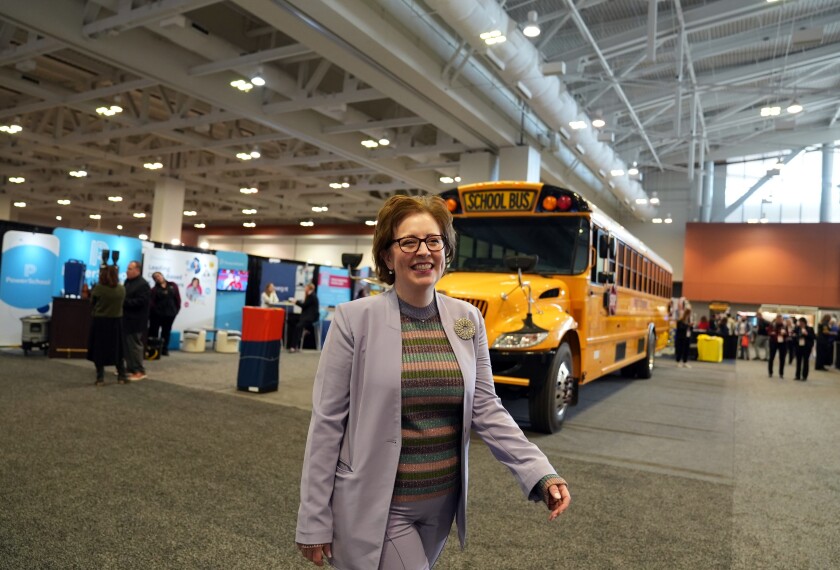
Superintendent Mary Catherine Reljac walks around the exhibition hall of the National Conference on Education in Nashville, on Feb. 12, 2026. Reljac is the superintendent for Fox Chapel Area School District in Pennsylvania.
Mary Catherine Reljac walks around the exhibition hall of the National Conference on Education in Nashville on Feb. 12, 2026. Reljac, the superintendent for Fox Chapel Area school district in Pennsylvania, is working to combat chronic absenteeism through data analysis and tailored student support.
Kaylee Domzalski/Education Week
Student Absenteeism Opinion Progress on Absenteeism Is Stalling. What Can We Do About It?
Recent attendance trends indicate that something fundamental about schooling has changed.
Nat Malkus
5 min read
2 students stand before a school in the distance.
Getty + Education Week
Student Absenteeism Absenteeism May Hurt Academics Long Before It Becomes 'Chronic'
The 10% threshold for chronic absenteeism may be too high to predict academic risk, study says.
4 min read
Photo of girl walking in school courtyard.
iStock